WAEH 🌍 | Newsletter October 2021


WAEH Webinar
BIG DATA? The Impact on Eyecare
Date: 14 October
Time: 13.00 Central European Summer Time
From 14.00-14.30 : Meet the Chair
Moderator: Maaike van Zuilen
Presenters

Aier Eye Hospital Group (China) – Professor ZhengWang
Chief Director of Aier Refractive Academic Committee
Big Data Analysis Report on Myopia Surgery in China Market
On May 23rd, Aier School of Ophthalmology, Central South University and Aier Eye Research Institute jointly released Big Data Analysis Report on Myopia Surgery in China Market to the public, which sampled and studied 1.02 million eyes with myopia surgery performed at the Aier Eye Hospital in China from 2018 to 2020. This report provides insightful guidelines for myopia surgery quality improvement so as to benefit more patients with high-quality vision through advanced technology.

Tays Eye Centre (Finland) – Professor Anja Tuulonen
Chief Physician, aces-rwm Project Leader
Tampere University Hospital
Tampere, Finland
A comprehensive model for measuring real-life cost-effectiveness in eyecare
A 12-minute summary of this paper: https://onlinelibrary.wiley.com/doi/epdf/10.1111/aos.14959.
Tays has already collected real-world data of 200 000 interventions in 2008-20 which we are currently analyzing.

Moorfields Eye Hospital (United KIngdom) – Dr. Konstantinos Balaskas
A team led by Dr Konstantinos Balaskas at Moorfields Eye Hospital Reading Centre has developed a fully automated, deep-learning model (algorithm) that can detect and quantify geographic atrophy using standard optical coherence tomography (OCT) scans. The algorithm will be hugely beneficial to clinicians providing care for patients with geographic atrophy (GA), who will need a reliable and fast way to assess the severity of geographic atrophy, how fast it progresses and how well it responds to emerging new treatments With research into ground-breaking new treatments for GA showing great promise, this new model helps pave the way for their effective use for patient benefit.


15th Annual WAEH Meeting
On 8 september 2021 the Annual Meeting took place. All presentations are puublished on the knowledge: go to the hub. Want to see whats been talked about? Watch the recording. Want to take a look at the graphic report time-lapse? Look here.
Login details – Knowledge Hub
No login? Please contact Maaike van Zuilen via: to request the login details.

2021 – Call for projects
Each year 2 to 3 projects are led by our member eye hospitals to help shape and improve ophthalmic care on a global scale. Each project can be budgeted with a budget of 7.500 euro. This is paid from the fees of the WAEH membership. We would like to invite you again to share your project ideas.
Current projects are the WAEH Medical Outcome project and the WAEH Clinician Burn out project.
What about the Project Groups?
- They are WAEH Member-led
- They collaborate on specific themes from Artificial intelligence to Medical outcomes
- They network and brainstorm via online Zoom meetings to maximise the impact and reach of sharing knowledge during the projects
- They share their lessons learned, knowledge and experience also via the WAEH knowledge hub and via the WAEH newsletter
- They host a round table and present their project during the Annual Meeting
Examples of WAEH projects:
· WAEH Medical outcome project + results
· Development of an international procedure of applying eye drops
· Management of AMD Patients
· RedefinIng the patient flow of Glaucoma patients
Ideas are welcome!
Do you have an idea of something you would like to change or innovate in your Eyehospital? Want to run a WAEH project?
Send in your project proposal! Check out the project proposal format.
For an example, see the project proposal about the Patient Enucleation Education Package – a project ran by Mitchell Wilson from the Royal Victorian Eye and Ear Hospital from Melbourne in the most excellent way: project proposal Patient Enucleation Education Package.
Or contact Maaike van Zuilen:

The IAPB World Sight Day 2021 Photo Competition
14 October 2021: World Sight Day 2021! 👀🤍 This year the organisation has something new: The IAPB World Sight Day 2021 Photo Competition! The competition is an opportunity to demonstrate your photography skills and share with the world what you see. The IAPB invites you to submit your interpretation of this year’s theme: #LoveYourEyes.
They are looking for images that capture a range of what it can mean to have healthy vision. Children who are reaching their full potential because of clear vision, older persons fully participating in society because of corrective surgery, the tireless efforts of health workers to ensure that no one is left behind or the hope for a brighter, healthier future.
By entering the World Sight Day Photo Competition, your images become an important part of raising awareness and celebrating why EVERYONE COUNTS.
We all have stories to share, and we want to see yours. Submit your photos on https://www.iapb.org/world-sight-day/2021-photo-competition/ 📲


10 December – 14.00 CET
Schwartz Rounds: The wider impact on people’s lives following the Covid 19 pandemic
More information about the webinar soon at our website.


St. Erik Eye Institute
Eye melanoma associated with optic nerve challenging to treat
A recently published study by researchers at St. Erik’s Eye Hospital, Karolinska Institutet and the University of Southern California shows that it is more difficult to treat malignant melanoma in connection with the optic nerve of the eye.
Malignant melanoma of the eye (a type of eye cancer) can be treated with so-called brachytherapy, which means that a radioactive applicator is temporarily sewn to the white of the eye to irradiate the tumor.
The study, which compares the results of different types of treatment, shows that the risk of the eye having to be removed or the radiation treatment repeated is two to three times higher when the treatment is performed on tumors near the optic nerve. This is because the optic nerve prevents the applicator from enclosing the tumor in an optimal way. Applicators with a small groove for the optic nerve gave higher radiation doses in the tumor, but the shape of the applicator, which radioactive substance was used or if supplemented with laser treatment had no effect on either the risk that the treatment needed to be repeated, that the eye needed to be removed later stage or for the risk of dying from the disease.
Read more here
Source: St.Eriks Eye Hospital
Date: 26 August 2021
Wilmer Eye Institute
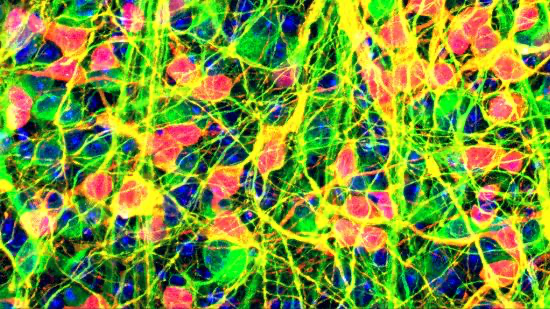
Seeking early-stage investigators
RReSTORe (The Retinal ganglion cell (RGC) Repopulation, Stem cell Transplantation, and Optic nerve Regeneration (RReSTORe) consortium, an international collaborative that aims to advance translational development of vision restoration therapies for optic neuropathy, is seeking early-stage investigators to join this exciting initiative. They especially encourage applications from investigators from underrepresented backgrounds in science and medicine.
For more information: https://lnkd.in/gsxxn3wg

Moorfields Eye Hospital, London
Treatment for geographic atrophy (a major cause of vision loss in patients with ‘dry’ AMD) a step closer after artificial intelligence breakthrough by Moorfields/UCL
A team led by Dr Konstantinos Balaskas at Moorfields Eye Hospital Reading Centre has developed a fully automated, deep-learning model (algorithm) that can detect and quantify geographic atrophy using standard optical coherence tomography (OCT) scans. The algorithm will be hugely beneficial to clinicians providing care for patients with geographic atrophy (GA), who will need a reliable and fast way to assess the severity of geographic atrophy, how fast it progresses and how well it responds to emerging new treatments With research into ground-breaking new treatments for GA showing great promise, this new model helps pave the way for their effective use for patient benefit. The study has been published in the Lancet Digital Health.localisation and progression of GA automatically. They then tested the algorithm using a completely different set of human-graded OCT scans from patients at Moorfields Eye Hospital.
Read more on the website of the WAEH
Source: Moorfields
Date: 8 September 2021

Questions? Share news?
Do you have a special request? Would you like to organize a webinar or share news? Fill in this WAEH form
Or would you like to be (digitally) connected to a certain person in one of our member eye hospitals? Please feel very welcome to contact Maaike van Zuilen: