Correct use of eye drops vital in curbing rapid deterioration of sight for Melbourne mum

The Royal Victorian Eye and Ear Hospital (Eye and Ear), has partnered with the World Association of Eye Hospitals (WAEH) to produce a new animated eye drops application video. The theme for World Sight Day (13 October) is #loveyoureyes and that is exactly the message they hope patients living with eye disease will get by watching this new instructional video.
Co funded by WAEH and the Nelken Trust, the video forms a Patient Eye Drop Education Package to be used globally to teach a standardised technique for clinicians and patients – with the aim to improve compliance and health literacy.
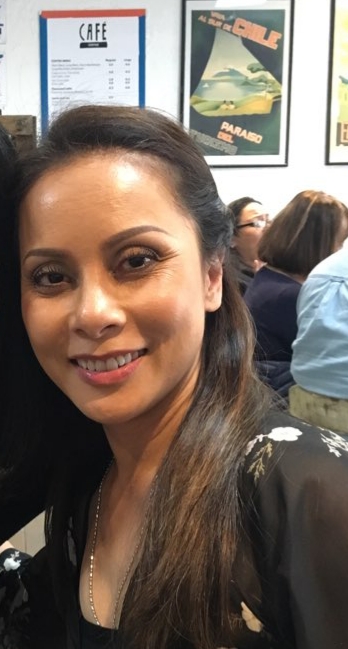
New Melbourne mum, Tu Nguyen thought she was prepared for all the challenge’s motherhood would bring. What she wasn’t expecting was blurred vision and a throbbing pain in her eye in the months following the birth. At just 32, she was diagnosed with glaucoma, an incurable sight-threatening eye disease.
Known as the sneak thief of sight, thankfully for Tu, this wasn’t the case. Tu ordinarily she would have soldiered on, but the pain in her eye was too debilitating to ignore.
“For the first two years I lived in fear that I would never see my daughter’s face again” said Tu.
She was prescribed eye drops to help reduce the pressure inside the eye. She was confronted by information related to her condition: “I was told once they go over a certain pressure and the issue is not addressed in time, my vision is gone for good”.
Tu was desperate to do whatever she could to maintain her sight and was meticulous about applying her eye drops properly. “My eye drops were the difference between keeping my vision or a rapid deterioration.”
“Glaucoma is the world’s leading cause of irreversible blindness. It is estimated to affect 66 million people worldwide. But it can be very successfully treated with eye drops alone.” said Dr Alp Atik, Glaucoma Specialist at The Royal Victorian Eye and Ear Hospital.
Since her glaucoma diagnosis, Tu has been a patient at the Eye and Ear for more than five years, and lived with Glaucoma for more than a decade. It has been an ongoing battle to manage and stabilise her condition. She has had 11 surgeries and laser treatments, losing nearly 90 per cent of her vision in her early 30’s.
Tu has been a model patient, engaged in her healthcare and very compliant with her treatment. Unfortunately, she has a very aggressive form of glaucoma. “Many patients put their vision at risk by either not taking their eye drops regularly or not applying them properly. Compliance with glaucoma medications are as low as 21 per cent according to some studies[i]. Teaching a standardised technique is key to avoid unnecessary surgeries and making sure the drops are administered correctly.” said Dr Atik.
Hospital data shows a 29 per cent increase of surgical patients with Glaucoma in the past 20 years.
The last resort for Tu was a procedure to insert a tube into her eye, in order to reduce and stabilise the pressure. Since this surgery, her visits to the hospital have reduced from fortnightly to every 6-8 weeks. Tu feels she has benefitted from the collaboration of a large team of eye specialists, the wealth of knowledge, experience and different perspective.
The hospitals’ research partner, the Centre for Eye Research (CERA), is co-located at the hospital. This partnership gives patients access to the latest in treatments and clinical trials, enabling rapid translation from the lab benchtop to bedside care.
“The surgeries have helped to prolong my vision, but eventually I will go blind. I feel safe in the hands at the Eye and Ear and know they are doing everything that can be done”
The prevalence of glaucoma in Australia is expected to increase from 208,000 in 2005 to 379,000 in 2025 because of the aging population. Health system costs over the same time period are estimated to increase from $AU355 million to $AU784 million. (Dirani 2011) [ii]
“Please get your vision checked regularly, do not leave it to chance it is your most important sense.”
“Glaucoma is one of the leading causes of blindness, we have to do what we can to ensure patients are using eye drops correctly to preserve their vision for longer.
Correct use of eye drops is a shared responsibility between patient, doctor, nurse and pharmacy team. WAEH is proud to have developed a practical, patient centered resource that will benefit the eye healthcare of patients globally. It has specifically been animated to allow for translation into any language”. Cathy Kowalewski, Chair of the Executive Board of the WAEH says “I would encourage all eye health professionals to share it with their patients.”
The Royal Victorian Eye and Ear Hospital led the important improvement project in collaboration with the Wilmer Eye Center, John Hopkins, Baltimore USA; Moorfield’s Eye Hospital, NHS Foundation, London UK; Rotterdam Eye Hospital, Netherlands; Bascom Palmer Eye Institute, University of Miami, USA; Aravind Eye Care, India and Singapore National Eye Centre, Singapore.
[i] Jang Y, Jee D, Lee D, Choi NK, Bae S. Medication Adherence and Persistence of Open-Angle Glaucoma Patients in Korea: A Retrospective Study Using National Health Insurance Claims Data. Int J Environ Res Public Health. 2021 Apr 13;18(8):4106. doi: 10.3390/ijerph18084106. PMID: 33924601; PMCID: PMC8069643.
[ii] Economic impact of primary open-angle glaucoma in Australia, Mohamed Dirani PhD , 2011, Clinical and Experimental Ophthalmology 2011 [ii]