Bilateral cataract surgery can save millions in healthcare costs
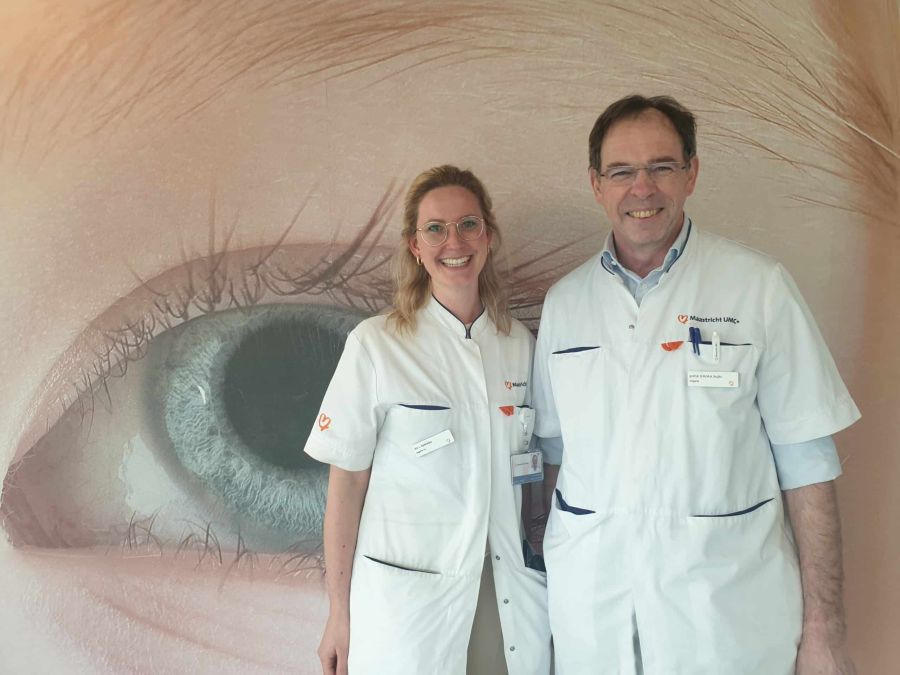
News from our full member the University Eye Clinic Maastricht
Operating on cataracts in both eyes on the same day instead of two weeks apart is equally safe but cheaper and more patient-friendly. Patients need to use eyedrops for a shorter period and they no longer experience inconvenience due to the difference in vision between their eyes in between the two operations. Moreover, introducing this innovation throughout the Netherlands could lead to an annual saving of up to €27 million in costs to the community. These are the findings of a large-scale study led by Maastricht UMC+.
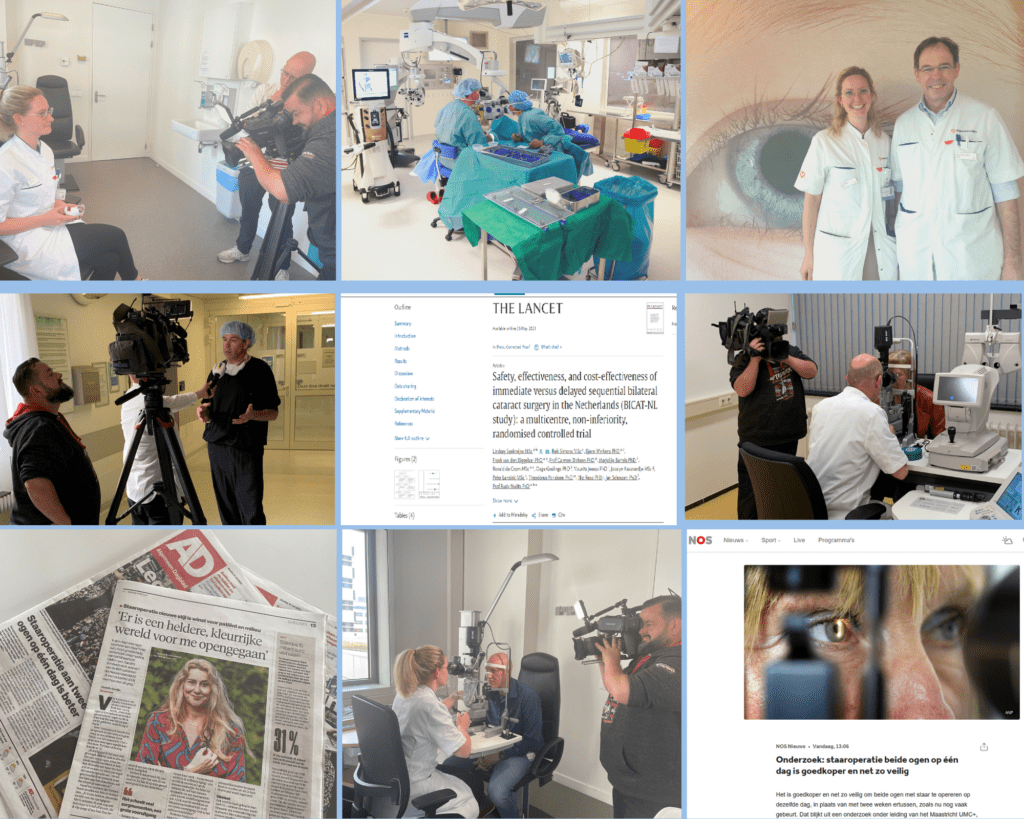
After this innovation was developed and evaluated abroad, Rudy Nuijts – professor of ophthalmology at Maastricht UMC+ – carried out a large-scale study of same-day bilateral cataract surgery in the Netherlands. In the light of the study (funded by the Netherlands Organisation for Health Research and Development, ZonMw) comparing this innovation to regular care among 865 patients, Nuijts and his co-researchers published their results in the renowned medical journal The Lancet.
Treating cataracts
Cataract is an eye condition in which ageing causes the ocular lens to become cloudy, often in both eyes. As a result, the patient’s vision gradually deteriorates. Traditional treatment involves an operation on each eye to replace the lens with a plastic lens, with the second eye surgery two weeks after the first. This two-week gap is traditionally maintained to prevent infection from occurring in both eyes at the same time – however, in fact a very rare complication. It was thought, moreover, that during this interim period, the prescription for the artificial lens for the second eye could be altered based on the result of the spectacle lens needed for the first eye. After each operation, patients are given a specific four-week regimen of eye-drops and (telephone) check-up appointments are scheduled.
Bilateral surgery
The traditional approach has its drawbacks: because of the two-week interval, the two eye-drop regimens overlap, something that patients often find confusing and complicated. Some patients therefore need home care for this. Performing bilateral cataract surgery on just a single day means that only one straightforward eye-drop regimen is required, for both eyes. The use of eye-drops is also reduced by two weeks, as is the possible need for home care. This also shortens the overall recovery process by two weeks, allowing patients to resume their activities and work sooner.
Reduced costs for the community
Using a standardised community cost analysis, the researchers determined the costs that could be saved if cataract surgery at a two-week interval were to be replaced by single-day bilateral cataract surgery. They factored in not only the cost saving in the actual care process, but also, for example, the cost of home care for some of the patients and the savings from patients resuming work earlier (a total of about €400 per patient). Given that there are about 180,000 cataract operations annually in the Netherlands, the researchers arrived at a potential saving of €27.4 million per year.
Safe and effective too?
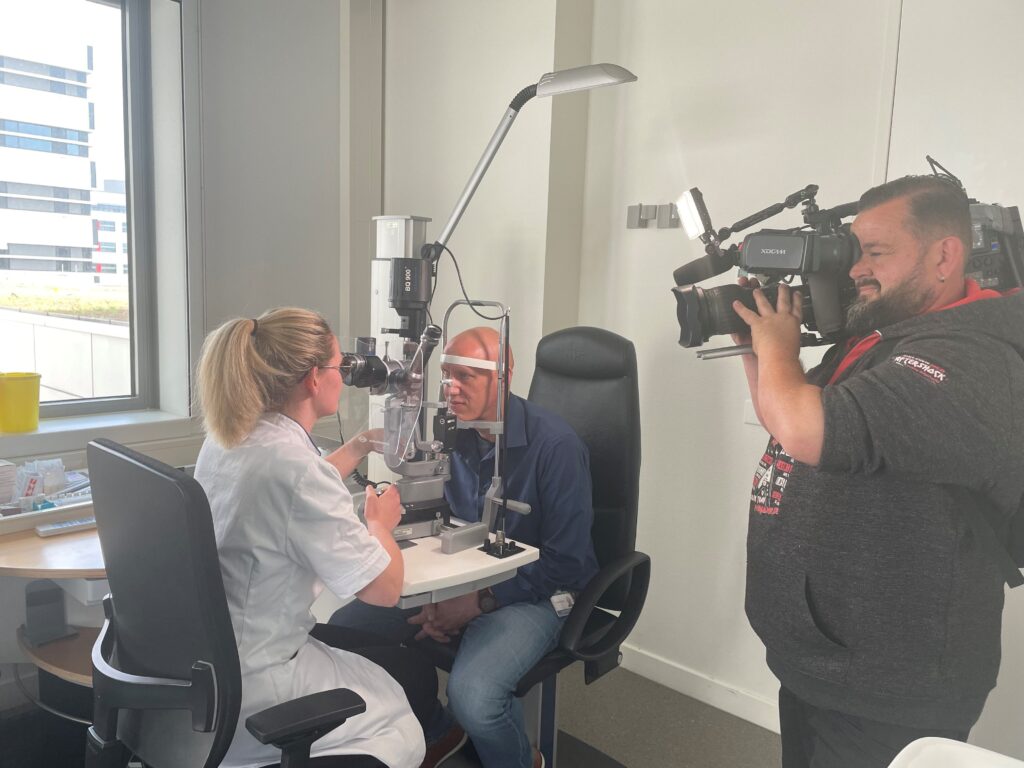
To minimise the risks of complications in both eyes, bilateral cataract surgery is approached as two consecutive but separate procedures. After the surgery on the first eye, the surgeon and the surgical team exchange all the instruments, medication, and protective equipment before operating on the second. Prof. Nuijts and his fellow researchers established that this approach does not lead to more complications. They also found that the improvement in vision was as good as with unilateral cataract surgery. In other words, the bilateral method is just as safe and effective as the unilateral method.
Implementation too?
Researcher and ophthalmologist-in-training Lindsay Spekreijse is pleased with the results, but also explains that achieving such a major saving takes time: ‘To achieve the savings we’ve described, bilateral cataract surgery needs to be implemented at almost all the hospitals and independent clinics in the country. But organising the logistics to really approach bilateral cataract surgery as two procedures can’t be introduced just like that. For it to be successful, ophthalmologists will need to make appropriate arrangements with the operating theatre team, with the planners, and with the parties responsible for supplying medication and sterilising the instruments. The ten hospitals involved in this study already have all this in place, as do a number of other hospitals – the “early adopters”. But dozens of hospitals and clinics have yet to follow suit. Fortunately, we’re getting more and more requests to share our experience and to help implement this new approach elsewhere. And we’ve also received an additional grant from ZonMw to expedite nationwide implementation.’
Participating hospitals
The 865 patients who took part in the study were operated on at ten Dutch hospitals: Amphia Hospital (Breda), Canisius-Wilhelmina Hospital (Nijmegen), Deventer Hospital, Elisabeth-TweeSteden Hospital (Tilburg/Waalwijk); Gelre Hospitals Group (Apeldoorn/Zutphen/Lochem), Isala Hospitals Group (Zwolle etc.), Haaglanden Medical Centre (The Hague), Medical Spectrum Twente (Enschede), Zuyderland Medical Centre (Heerlen/Sittard-Geleen), and Maastricht UMC+.
Frank van den Biggelaar presents at the WAEH 17th Annual Meeting in Sydney on Saturday. Register here!
The publication in the Lancet: https://www.thelancet.com/journals/lancet/article/PIIS0140-6736(23)00525-1/fulltext